
A campaign for an airport bar,
measured in people who walked into it.
Who
Royal Salute is
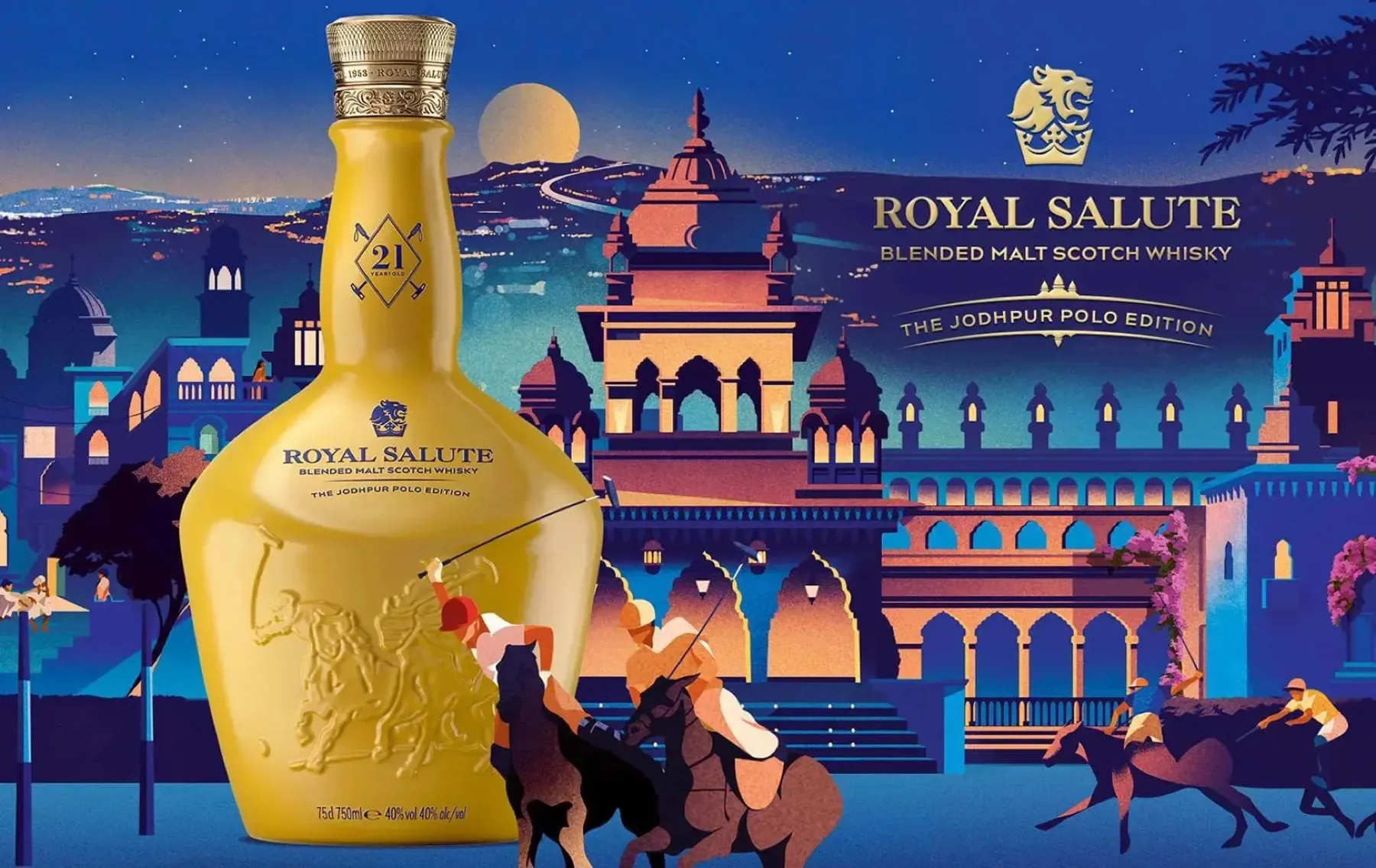
Royal Salute is a premium blended Scotch whisky. The 21 Year Old Jodhpur Polo Edition launched into airport duty-free in Taiwan and Singapore, with a dedicated Pillar Bar at Taoyuan airport as the physical centre of the activation.
Two objectives ran side by side: awareness for the launch across both airports, and traffic to that bar. The second one is the harder brief, because it asks a digital campaign to move somebody through a terminal.
The audience is
in transit, and
the result is a room
A premium Scotch in Asian travel retail has to reach two audiences at once, local consumers and passing travellers, in one of the most competitive liquor markets there is, and inside the narrow window when someone is actually in the terminal.
The real difficulty is measurement rather than reach. Impressions and clicks say nothing about whether anyone walked into a bar, and the whole point of the activation was the bar.
Outbound Taiwanese and Singaporean travellers, plus Chinese travellers transiting Singapore, each reachable through a different ecosystem.
The buying moment is the hours between check-in and boarding, which no always-on plan is shaped for.
The objective was physical: a visit to the Pillar Bar. Nothing in a standard media report answers that.
Reach them before
the airport, then
inside it
The plan was split by where the traveller is rather than by channel. Before the trip, confirmed-traveller data does the targeting. In the airport, the channels people actually hold in their hand do it. And underneath both, a footfall measurement layer so the campaign could be judged on the thing it was for.
Confirmed-traveller data from Amadeus used to target Meta placements, alongside Sojern's travel audiences. Buying a person with a booking rather than everyone near an airport.
Grab in-transit placements on the ride to Changi, WeChat Moments for Chinese travellers in Singapore, and programmatic display through The Trade Desk with Foursquare location data around Taoyuan.
Footfall measurement on the Pillar Bar itself, so the question stopped being how many people saw the ad and became how many of the people who saw it turned up.
Six channels,
one question
Confirmed-traveller targeting on Meta, using airline booking data as the audience signal rather than interest or proximity. It produced the highest click-through of any placement in the plan, well ahead of what was projected.
In-transit placements on the ride to the airport, reaching people already on their way, with the segment that had engaged with previous spirits campaigns performing best of all.
WeChat Moments for Chinese travellers in Singapore, the one ecosystem that reaches that audience while they are outside China.
Programmatic display with location data around Taoyuan, which turned out to be the most cost-effective layer of the plan and delivered several times the impressions projected.
Independent footfall measurement on the bar, run alongside the media so the physical result was measured by something other than the platforms selling the media.
Boosted creator content in Taiwan, with the posts chosen for relevance to the brand's audience rather than reach, which is why their engagement ran above the usual band for this kind of work.
The bar filled,
and we can prove
which part did it
Independent measurement recorded 4,967 visits to the Pillar Bar over the campaign, and between a quarter and a third of all measurable footfall at the site was attributable to the campaign, sustained across the whole run rather than spiking once.
The rest of the plan behaved the way the split intended. Confirmed-traveller targeting produced click-through two thirds above plan, the programmatic layer beat its projected impressions several times over at the lowest cost of the mix, and the creator posts ran above the usual engagement band for the format.
What this
case proves
A travel retail activation whose objective is physical has to be measured physically, or it cannot be judged at all. Putting footfall measurement on the bar before the campaign started is what turned this from a media report into an answer.
The second lesson is about targeting. Buying confirmed travellers rather than people near an airport produced the best-performing placement of the plan by a distance, which is the same argument the Nestlé World Cup activation makes from the other end of the journey.