
Two objectives, one audience, a short window, and the two campaigns had to feed each other.
Who the client is
Rémy Martin is a French cognac house with 300 years of heritage. Their Hong Kong team was running two simultaneous activations tied to the brand's 300th anniversary: a Dreaming Forward pop-up at ELEMENTS shopping mall, and a product promotion campaign driving purchases through e-commerce for the anniversary collection.
comtogether was brought in to run paid media across both objectives within a compressed campaign window, targeting a niche audience of cognac enthusiasts in a competitive luxury market.
One audience. Two asks. Same window.
Reaching a narrow, high-intent cognac audience in Hong Kong with two distinct calls to action: attend a physical pop-up and buy a product online, within the same campaign period, without the two objectives competing for budget or attention.
The luxury market in Hong Kong is heavily contested. Getting in front of the right people at the right moment required more than a standard geo-targeted campaign; it required a sequenced architecture built around how a single person moves from product interest to event intent.
Fill the 300th-anniversary pop-up in Hong Kong, against a narrow cognac audience with a fixed date.
Drive e-commerce interest for the same range, to the same audience, without the two objectives eating each other's frequency.
Not two campaigns. One sequence.
The audience for both objectives overlapped significantly. Running two separate media plans would split frequency and dilute message impact on the group most likely to convert on both.
The fix was not a bigger budget. It was a single audience architecture with sequenced messaging, moving the same person from product-level awareness through to event registration within the campaign window. Each touchpoint had a defined role in that sequence.
Drive registrations for the Dreaming Forward pop-up at ELEMENTS. Attendees needed to be cognac enthusiasts willing to engage with an immersive brand experience.
Drive traffic from cognac enthusiasts to online retailers carrying the 300th anniversary product range. Clicks measured against anticipated target volume.
Two creative tracks. One architecture.
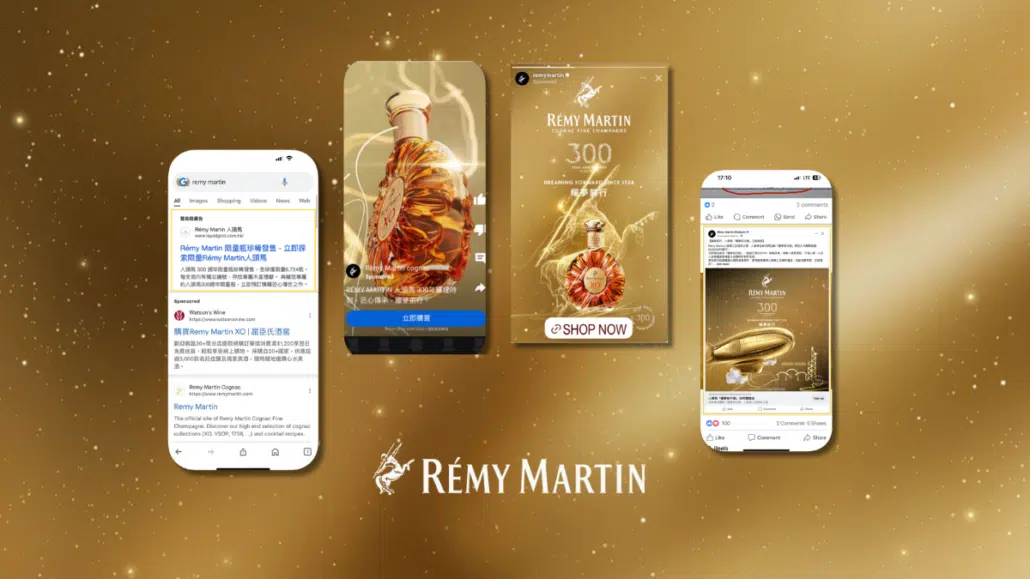
Two distinct creative tracks on Google Ads and Meta Ads: one built for event registration conversion, one for product click-through to e-retailers. Different messaging, different CTAs, same underlying audience.
Omnichannel sequencing across social media, display, and video touchpoints. Each format played a defined role moving cognac enthusiasts from product awareness toward event intent and purchase.
KPI tracking dashboard built for live monitoring of both objectives simultaneously. Enabled ongoing budget reallocation between event and product tracks based on real performance data throughout the campaign.
Close campaign optimization throughout the window. Budget and bid adjustments made continuously against both CPA targets without allowing one objective to cannibalize the other.
One audience, three ecosystems. The same sequenced structure ran across Meta, YouTube and the Google Display Network, so the event and the product tracks shared a frequency picture instead of bidding against each other in three separate places.
Both objectives outperformed simultaneously.
Results measured against Rémy Martin Hong Kong's previous event benchmarks and anticipated click targets for the product campaign.
What this case proves
Dual-objective campaigns for luxury brands do not require double the budget. They require a single audience architecture with sequenced messaging. When event and product objectives share a targeting and creative logic rather than competing for the same impression pool, both can outperform simultaneously.
The key diagnostic was recognizing the audience overlap before building the plan. Running two independent campaigns would have split frequency and weakened both. A sequenced structure with a shared foundation turned a constraint into a compounding effect: product exposure primed the event registration, and event participation reinforced product intent.